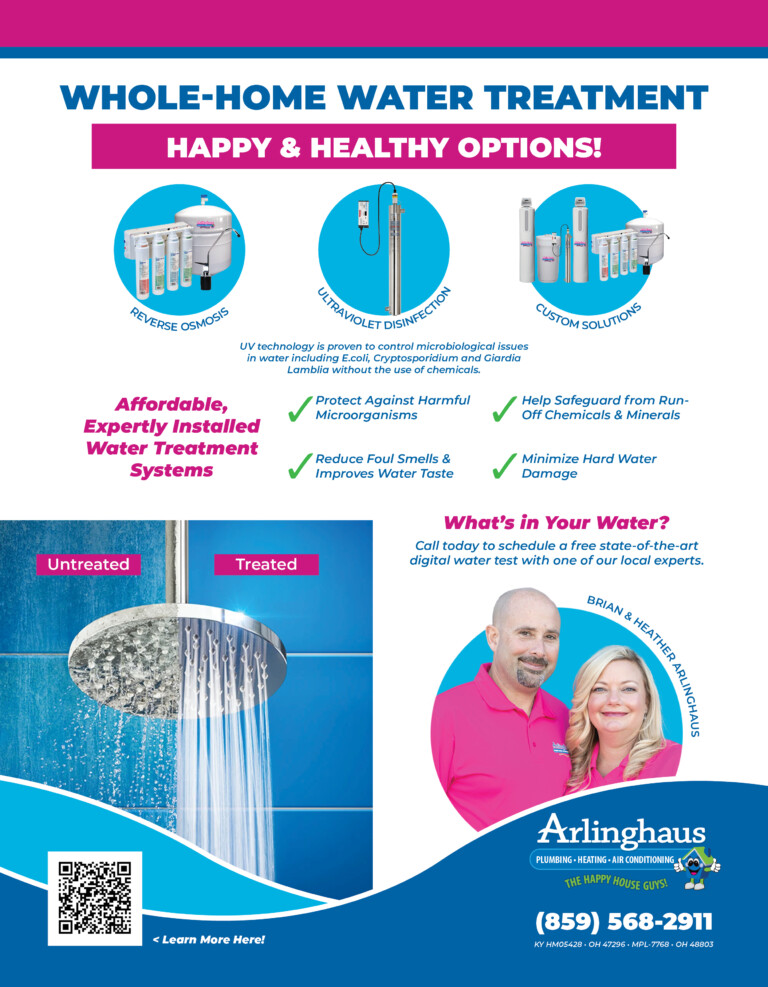
How does a whole home water treatment system work?
Whole home systems use one or more stages of filtration media (such as sediment filters, carbon filters, or softening media) installed at the point where water enters your home. These media trap contaminants, remove hard minerals, and improve water quality before it flows through your plumbing.
What problems can a whole home system solve?
These systems improve overall water quality and address issues such as:
Hard water buildup from minerals like calcium and magnesium
Chlorine taste and odor
Sediment or particles in water
Cloudy water or staining on fixtures
Poor water quality that affects appliances and clothing.
How do I know if I need a whole home water treatment system?
You might benefit from one of these systems if you notice:
Scale buildup on faucets or in appliances
Dry skin or dull hair after showers
Cloudy or bad‑tasting water
Frequent plumbing or appliance issues
Testing your water quality is the best first step to choose the right system for your home.
How often do filters need to be replaced?
Filter replacement depends on your system type and how much water your household uses. Sediment and carbon filters typically need changing every 6–12 months, while water softener media may last longer. Your installer will tell you the recommended maintenance schedule.
Are whole home water treatment systems worth it?
For many homeowners, yes. They protect your plumbing, improve water quality throughout the house, and can extend the life of appliances that use water. Cleaner, softer water also leads to better bathing, cleaner dishes, and fewer mineral stains around the home.